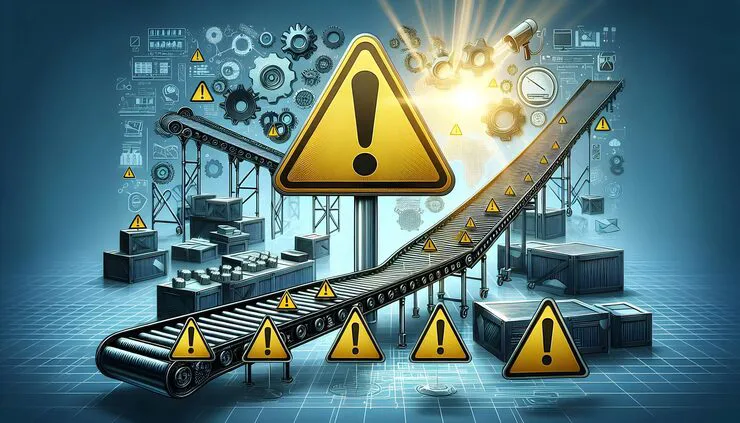
Types of risks in companies
In a rapidly changing business world, companies do not rely solely on planning and growth; they also need the ability to handle challenges and risks that may impact their stability and success. Therefore, understanding the types of corporate risks has become a fundamental part of modern management. Identifying potential threats helps in making better decisions and protecting organizations from unexpected losses.
In this article, we will explore the concept of corporate risks and the primary challenges institutions face in the work environment. We will detail the most prominent types of risks facing companies, such as financial, operational, strategic, and legal risks. Additionally, we will discuss the problems that may hinder corporate growth and the causes behind these risks. We will also highlight effective risk management strategies, the importance of risk management in enhancing business stability, and the top accredited professional certifications in the field. Stay with us until the end of the article to learn more.
What are Corporate Risks?
Companies operate in a business environment full of challenges and constant changes, making them vulnerable to several potential threats. Understanding the types of risk management is a vital step for any organization seeking growth and market sustainability. Risks can arise internally, such as weak management or operational failures, or externally, such as economic shifts or intense competition.
The concept of corporate risk refers to any potential event or circumstance that could negatively affect a company's ability to achieve its goals or execute its strategic plans. As the business environment grows more complex, it has become essential for institutions to recognize the risks facing companies and develop effective management systems. Understanding these risks helps organizations predict potential problems and prepare for them, reducing losses and enhancing success.
If you are interested in professionally developing your knowledge in this field, enrolling in specialized training programs in risk and business management is a significant step toward building a strong career.
What are the Types of Risks Facing Companies?
Organizations across various sectors are exposed to diverse risks. Understanding these categories is essential for developing effective management strategies.
1. Financial Risks
Financial risks are among the most impactful on a company's stability as they directly relate to profitability. They include:
- Currency or interest rate fluctuations.
- Decline in revenue or profits.
- Cash flow problems.
- Investment losses and rising operating costs.
2. Operational Risks
These occur due to failures in daily operations or internal systems. They are prominent in all sectors and include:
- Technical or production system failures.
- Employee errors or lack of training.
- Weak internal procedures and supply chain issues.
3. Strategic Risks
Strategic risks arise from inappropriate management decisions that affect the company's market future, such as:
- Choosing an unsuitable growth strategy.
- Entering unstudied markets.
- Inability to compete or poor resource management.
4. Legal and Regulatory Risks
These involve risks associated with non-compliance with laws or regulations, leading to:
- Financial fines and lawsuits.
- Loss of operating licenses or intellectual property violations.
5. Technical and Cybersecurity Risks
With digital transformation, these have become a top priority. They include:
- Cyberattacks and data breaches.
- Loss of sensitive information and system outages.
6. Reputational Risks
A company’s reputation is one of its most valuable intangible assets. Examples include:
- Frequent customer complaints and media crises.
- Poor product quality and loss of customer trust.
Common Problems Facing Companies
Modern challenges often stem from unmanaged risks across administrative, financial, and operational aspects, such as:
- Weak strategic planning.
- High operating costs and fierce market competition.
- Poor human resource management and sudden economic changes.
Causes of Risk in Companies
- Weak administrative planning and lack of decision-making experience.
- Economic or political shifts.
- Rapid technological development and the absence of an effective risk management system.
Effective Strategies to Mitigate Corporate Risks
Risk management is not just about reacting to a problem; it’s about proactive planning. Modern institutions rely on several methods:
- Identification: Analyzing internal and external environments.
- Assessment: Evaluating the impact level of the risk.
- Contingency Planning: Setting plans before risks occur.
- Mitigation: Improving internal processes to reduce probability.
- Transfer: Such as asset insurance or outsourcing.
- Continuous Monitoring: Ensuring the effectiveness of management strategies.
Top Professional Certifications in Risk Management
- PMI-RMP: Project Management Institute - Risk Management Professional.
- CRM: Certified Risk Manager.
- FRM: Financial Risk Manager.
- ISO 31000: International Standard for Risk Management.
- ERM: Enterprise Risk Management.
Business Risks
Business risks are uncertain events that can reduce revenue, interrupt operations, damage reputation, or prevent goals. They may originate inside the organization or arise from economic, technological, regulatory, competitive, and environmental changes outside management’s control.
Effective management begins by identifying business risks, estimating probability and impact, assigning owners, and monitoring warning indicators. Be Mentor training helps professionals apply structured frameworks that support informed decisions, resilience, and organizational performance over time.
Company Risks
Company risks reflect threats specific to an organization’s strategy, people, systems, finances, suppliers, and customers. Weak governance, inaccurate forecasting, employee turnover, process failures, and data breaches can each undermine overall performance and stakeholder confidence significantly.
Leaders should connect company risks with objectives, controls, and accountability rather than maintaining an isolated list. Be Mentor develops practical risk management capabilities that help teams communicate exposure, prioritize treatment, and monitor changing conditions consistently.
Industry Risks
Industry risks affect organizations operating within the same sector, although their consequences vary by business model. Regulatory reform, commodity prices, technological disruption, labor shortages, supply constraints, and shifting customer expectations are common major industry-wide pressures.
Companies can track industry risks through scenario analysis, competitor monitoring, regulatory updates, and supplier intelligence. Be Mentor equips professionals with analytical methods for interpreting external changes and converting early signals into timely strategic responses effectively.
Types of Business Risk
Each type of business risk requires a suitable assessment method and response. Major categories include financial, operational, strategic, legal, compliance, cybersecurity, reputational, market, and supply chain risks, covering both internal weaknesses and external organizational uncertainty.
Understanding types of business risks prevents teams from overlooking connected exposures. Be Mentor helps learners classify types of risks in business, evaluate their causes and consequences, and develop controls that strengthen continuity across organizational functions.
Business Risk Examples
Business risk examples include cash flow shortages, supplier failure, cyberattacks, workplace accidents, product defects, regulatory penalties, and reputational crises. Each company risk example should describe the cause, event, consequence, owner, controls, and expected response clearly.
Examples become actionable when recorded with probability, impact, triggers, deadlines, and responsible owners. Be Mentor training guides professionals in building risk registers that transform broad concerns into measurable priorities and practical management decisions for organizations.
Business Risks and Solutions
Business risks and solutions should be matched carefully: organizations can avoid an activity, reduce exposure, transfer consequences through insurance or contracts, or accept manageable threats while maintaining contingency plans and financial reserves for unexpected events.
No response eliminates every uncertainty, so continuous monitoring remains essential. Be Mentor helps professionals design controls, evaluate residual risk, report changes to decision makers, and improve response plans through structured learning and business applications regularly.
Why Choose Be Mentor for Your Professional Journey?
If you aim to pass professional risk management exams with confidence, choosing the right platform is key. Be Mentor provides specialized training programs that combine reliable scientific content with practical applications.
Advantages of the Be Mentor Platform:
- Professional Content: Designed according to the latest global standards.
- Expert Trainers: Practical experience in risk management.
- Simplified Learning: Interactive methods for complex concepts.
- Simulated Exams: Practice tests that mimic actual exams.
- Flexibility: Easy-to-use digital platform for learning anywhere.
- Academic Support: Continuous assistance for all trainees.
Conclusion: Understanding the types of corporate risks is a fundamental step for any organization seeking stability. If you are looking to advance your career, Be Mentor offers a variety of professional programs in management, leadership, and project management under the supervision of experts.
Start your journey today and explore the training programs available at Be Mentor to build a more successful future.
FAQs
What is meant by risks in companies?
Business risks refer to any potential events or factors that may affect a company's ability to achieve its goals, generate profits, or remain in the market.
Why should companies manage risks?
Risk management helps companies reduce financial losses, improve management decisions, and protect the organization's reputation in the market.
How can risks be reduced in companies?
The types of risks that companies face can be reduced by analyzing potential risks, developing proactive plans to deal with them, and improving internal processes.
Why is it important to understand the types of risks in companies?
Understanding the types of risks in businesses helps organizations prepare for potential challenges and develop effective strategies to ensure business continuity and success in the market.